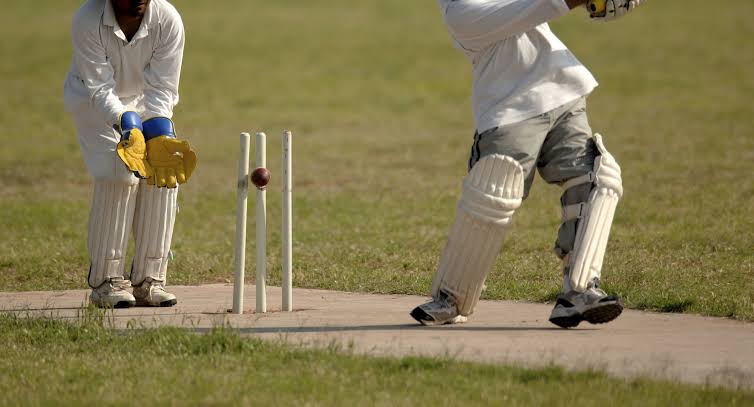
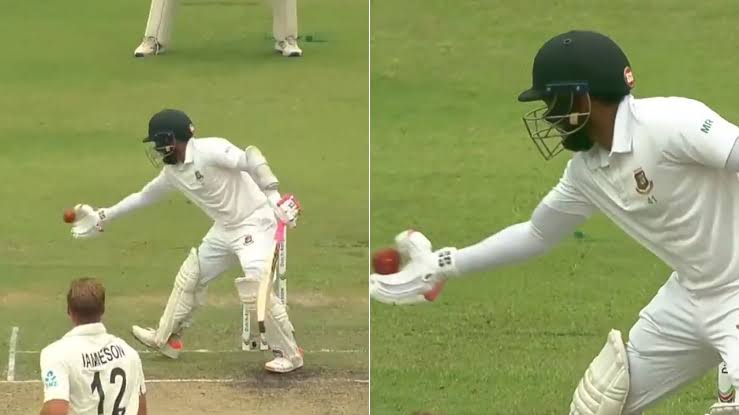
OBS in cricket stands for Obstructing the Field. It is a method of dismissal under which a batter can be given out for deliberately obstructing or distracting the fielding side through words or actions.
For example, a batter may be dismissed if they deliberately change their running path to block a throw, interfere with a fielder attempting a catch or distract an opponent who is trying to collect the ball.
However, not every collision or movement is an offence. The umpire must consider the circumstances and whether the batter’s action was deliberate. The dismissal is covered under Law 37 of the MCC Laws of Cricket.
What Is Obstructing the Field in Cricket?
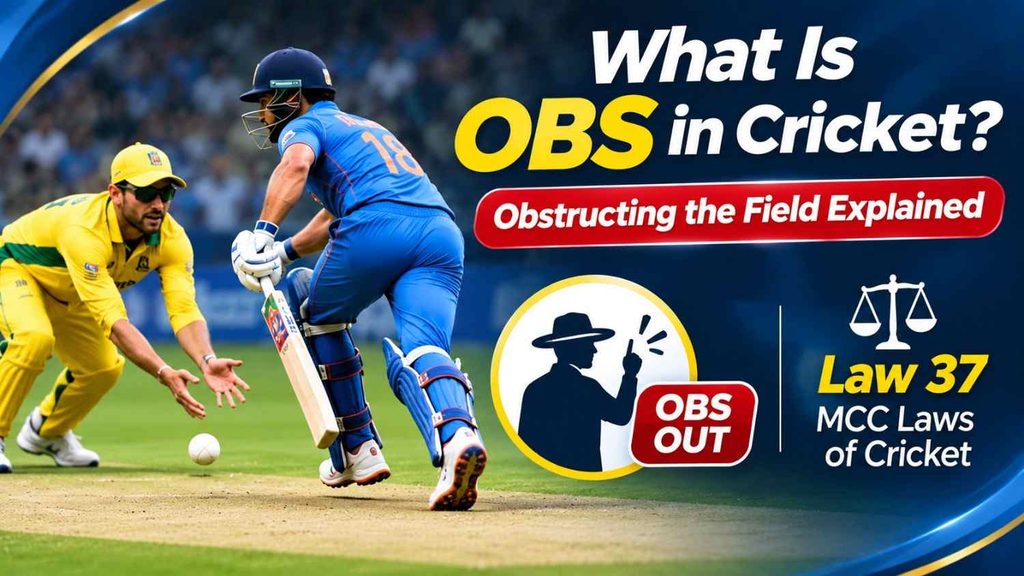
Obstructing the Field is one of the rarest methods of dismissal in cricket. It applies when a batter deliberately interferes with the fielding side while the ball is in play.
The dismissal can apply to either batter, not just the striker. It may involve blocking a fielder, distracting an opponent, interfering with a throw or preventing a catch.
The MCC’s fourth edition of the 2017 Code of Laws was announced on 3 February 2026 and came into force on 1 October 2026. It includes 73 material changes. Law 37 continues to cover Obstructing the Field, including a provision addressing a striker who deliberately drops or throws the bat while receiving the ball.
The decision depends on the circumstances of the incident. The umpire must consider the relevant provisions of Law 37 rather than treating every instance of contact or interference as an offence.
8 Situations That Can Lead to an Obstructing the Field Dismissal
Here are eight situations that explain how a batter may be dismissed under Law 37.
1. Deliberately Blocking a Fielder
A batter can be dismissed if they deliberately move into a fielder’s path to prevent them from collecting or throwing the ball.
For example, a fielder may be preparing to stop the ball when a batter intentionally moves across their path. If the action amounts to deliberate obstruction, the batter can be given out.
2. Changing Direction to Block a Run Out
A batter running between the wickets must not deliberately change direction to obstruct a fielder attempting a run out.
For example, a batter may move into the path of an incoming throw instead of continuing towards the crease. If the umpire considers the movement deliberate and it constitutes obstruction, the batter can be dismissed under Law 37.
A batter is not automatically out simply because a throw hits their body while they are running. The circumstances and relevant intention must be considered.
3. Deliberately Using a Hand to Stop the Ball
A batter can be dismissed for deliberately using a hand that is not holding the bat to stop the ball while receiving it.
The Laws distinguish between deliberate interference and an action taken to avoid injury. An accidental reaction to protect oneself should not automatically be treated as deliberate obstruction.
4. Preventing a Catch
A batter can be dismissed if either batter deliberately obstructs or distracts the fielding side and prevents the striker from being caught.
For example, the non-striker may deliberately interfere with a fielder attempting to take a catch. If that action prevents the catch, the striker can be dismissed under Law 37.
The rule also covers relevant situations involving a second strike to protect the wicket. However, the No-ball provisions and their exceptions must be considered separately.
5. Deliberately Dropping or Throwing the Bat
The 2026 edition specifically includes a provision covering a striker who deliberately drops or throws the bat while receiving the ball.
If the striker does this to affect the ball or prevent a dismissal other than Hit wicket, they can be given out for Obstructing the Field.
This is an important part of the current Law 37 wording and should not be confused with accidentally losing control of the bat.
6. Distracting a Fielder Through Words or Actions
Obstruction is not limited to physical contact. A batter can also be dismissed for deliberately distracting the fielding side through words or actions.
For example, a batter may deliberately shout or make a distracting comment while a fielder is attempting to collect or throw the ball.
The umpire must consider whether the action was intended to distract or obstruct the fielding side.
7. Returning the Ball to a Fielder Without Consent
Under Law 37.4, a batter can be dismissed for returning the ball to a fielder using their bat or any part of their body without the fielder’s consent while the ball is in play.
The rule does not require the batter to have intended to obstruct the field. The fielding side may appeal, and the umpire must apply the relevant Law.
Even if a batter believes they are simply helping the fielding side, returning the ball without consent can result in this dismissal.
8. Interfering With a Throw or a Live Ball
A batter can be dismissed if they deliberately interfere with a fielder’s attempt to complete a run out or otherwise obstruct the fielding side while the ball is in play.
For example, a batter may deliberately position themselves between a fielder and the stumps to interfere with an incoming throw.
The obstruction does not always need to involve physical contact with the ball. Deliberately blocking a fielder or distracting them at a crucial moment can also come under Law 37, unless a specific exception applies.
When Is a Batter Not Out for Obstructing the Field?
Not every incident involving contact or interference results in an Obstructing the Field dismissal. Law 37 contains provisions that protect batters in certain circumstances.
| Situation | Decision |
| Accidental obstruction or distraction | Not out under the relevant provisions |
| Obstruction while trying to avoid injury | Not out |
| Lawful second strike to protect the wicket | Not out, subject to the relevant catching provisions |
| Returning the ball to a fielder without consent while the ball is in play | Out on appeal |
| Deliberate obstruction that prevents a catch | Decision depends on the delivery and the relevant Law 37 provisions |
The most important distinction is that accidental contact is not automatically an offence. The umpire must apply the specific conditions of Law 37.
No-Ball Exception When an Obstruction Prevents a Catch
Law 37.3 also deals with obstruction or distraction that prevents the striker from being caught.
- On a delivery that is not a No ball: The striker can be dismissed if deliberate obstruction or distraction by either batter prevents the catch.
- On a No ball: The batter responsible for the obstruction can be dismissed under the relevant provision.
- Specific exception: If the striker lawfully makes a second strike to protect their wicket from a No ball and that action prevents a catch, the applicable exception must be considered.
This distinction is important because the outcome is not identical for every delivery.
Famous Obstructing the Field Dismissals in Cricket
Although this dismissal is rare, several incidents in international and domestic cricket have attracted significant attention.
Ben Stokes Against Australia, 2015
One of the best-known examples involved England all-rounder Ben Stokes during the second ODI against Australia at Lord’s on 5 September 2015.
Stokes had moved out of his crease after defending a delivery from Mitchell Starc. Starc collected the ball and threw it towards the striker’s stumps.
Stokes turned and dived back towards the crease, but the throw struck his left hand. The umpires reviewed the incident and gave him out for Obstructing the Field.
Stokes had scored 10 runs. The decision created considerable debate because he maintained that his hand movement was a natural reaction to protect himself.
Jason Roy Against South Africa, 2017
England batter Jason Roy became the first player to be dismissed for Obstructing the Field in a men’s T20 International.
The incident occurred during the second T20I against South Africa on 23 June 2017. Roy scored 67 runs off 45 balls before the dismissal.
While attempting to regain his crease, Roy veered from his running line and blocked the incoming throw with his body while he was short of his ground. The third umpire gave him out for Obstructing the Field.
The incident demonstrated how a batter’s movement while returning to the crease can lead to this dismissal.
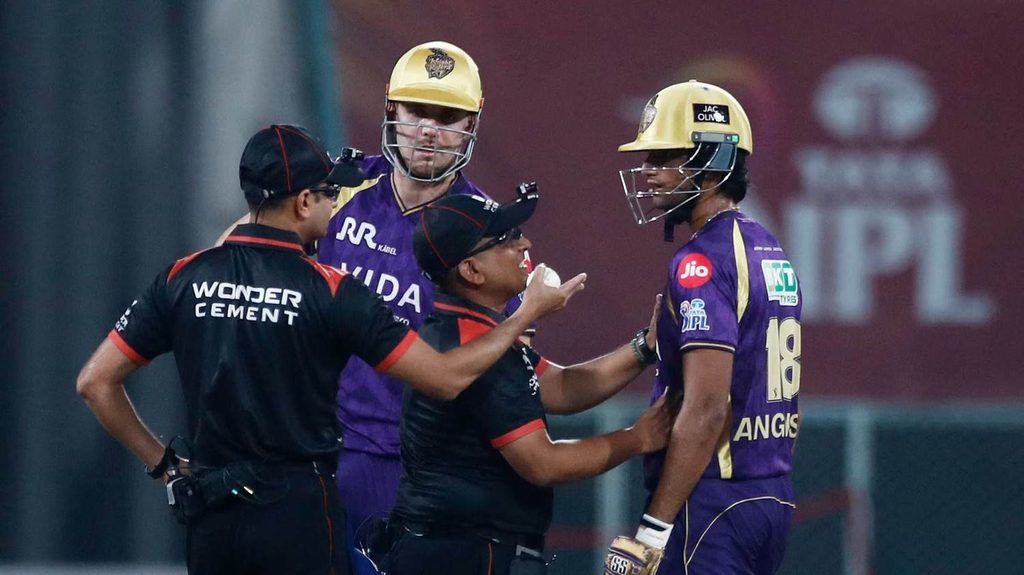
Angkrish Raghuvanshi Against Lucknow Super Giants, 2026
An IPL incident involving Kolkata Knight Riders batter Angkrish Raghuvanshi brought fresh attention to Law 37 on 26 April 2026. The incident occurred during the match against Lucknow Super Giants at Ekana Stadium in Lucknow.
Raghuvanshi attempted a quick single before his partner sent him back. He initially ran on the off side of the wicket, crossed towards the middle of the pitch, turned and returned on the leg side as a throw came in. The ball struck him, and the fielding side appealed. Third umpire Rohan Pandit gave him out for Obstructing the Field.
Raghuvanshi became the fourth player in IPL history to be dismissed for Obstructing the Field.
The MCC later clarified the decision on 30 April 2026. It explained that Raghuvanshi’s deliberate change of route across the pitch constituted a wilful act under Law 37. His movement placed him between the incoming ball and the stumps.
The MCC also clarified that, provided the obstruction was not intended to prevent a catch being taken, whether the throw would actually have resulted in a run out was not relevant to the obstruction decision.
What Happens After a Batter Is Given Out for Obstructing the Field?
Once the umpire gives a batter out for Obstructing the Field, the dismissal is recorded against that batter. However, the scoring consequences depend on the type of obstruction.
| Situation | Scoring outcome |
| Obstruction does not prevent a catch | Runs completed before the offence are dealt with under the applicable Law |
| Obstruction prevents a catch | Completed runs are not scored |
| Applicable penalty runs | Awarded according to the Laws |
| Bowler’s wicket record | Bowler does not receive credit |
| Obstruction prevents a catch under Law 37.5.2 | Fielding captain chooses who faces the next delivery |
Who Faces the Next Delivery After an Obstruction Prevents a Catch?
Source Image: Olympics
The 2026 edition includes an important provision under Law 37.5.2.
When obstruction or distraction prevents the striker from being caught:
- Completed runs are not scored.
- Applicable five-run penalties still stand.
- The fielding captain decides whether the non-striker or the incoming batter faces the next delivery.
This means the fielding captain has a specific choice about which batter faces the next ball in this situation.
The bowler does not receive credit for an Obstructing the Field dismissal. It is recorded as a non-bowler-credited wicket.
Is Obstructing the Field the Same as Hit the Ball Twice?
No. Obstructing the Field and Hit the Ball Twice are two different methods of dismissal under the MCC Laws of Cricket.
Under Law 34, a striker can be dismissed for a prohibited second strike with the bat or body, subject to the exception for protecting the wicket.
Under Law 37, a batter can be dismissed for deliberately obstructing or distracting the fielding side.
A striker may legally hit the ball a second time to protect the wicket in the circumstances allowed by the Laws. However, the relevant catching provisions under Law 37 must still be considered if that action prevents a catch.
Conclusion
Obstructing the Field is a rare but important method of dismissal in cricket. It applies when a batter deliberately interferes with the fielding side through words or actions while the ball is in play.
The dismissal can involve blocking a fielder, interfering with a run out, distracting an opponent, returning the ball without consent or deliberately dropping or throwing the bat in the circumstances covered by Law 37.
The MCC’s fourth edition of the 2017 Code came into force on 1 October 2026. Its updated provisions include the bat-dropping rule and the fielding captain’s choice of who faces the next delivery when an obstruction prevents a catch.
Understanding the current Law 37 helps players, officials and fans distinguish genuine obstruction from accidental contact or movement.
FAQs About Obstructing the Field in Cricket
OBS stands for Obstructing the Field. It is a method of dismissal under Law 37 of the MCC Laws of Cricket. A batter can be given out for deliberately obstructing or distracting the fielding side.
Yes. A batter can be dismissed for deliberately blocking a fielder or distracting the fielding side through words or actions. Physical contact with the ball is not necessary.
Accidental contact does not automatically result in an Obstructing the Field dismissal. The umpire must consider the circumstances and apply the relevant provisions of Law 37.
No. The bowler does not receive credit for an Obstructing the Field dismissal. It is recorded as a non-bowler-credited wicket.
Yes. Either batter can be dismissed under Law 37. For example, the non-striker may deliberately interfere with a fielder or prevent a catch while the ball is in play.